The Hidden Crisis: How Helium Threatens Global Technology

Python Arabic Community
١٤ أبريل ٢٠٢٦
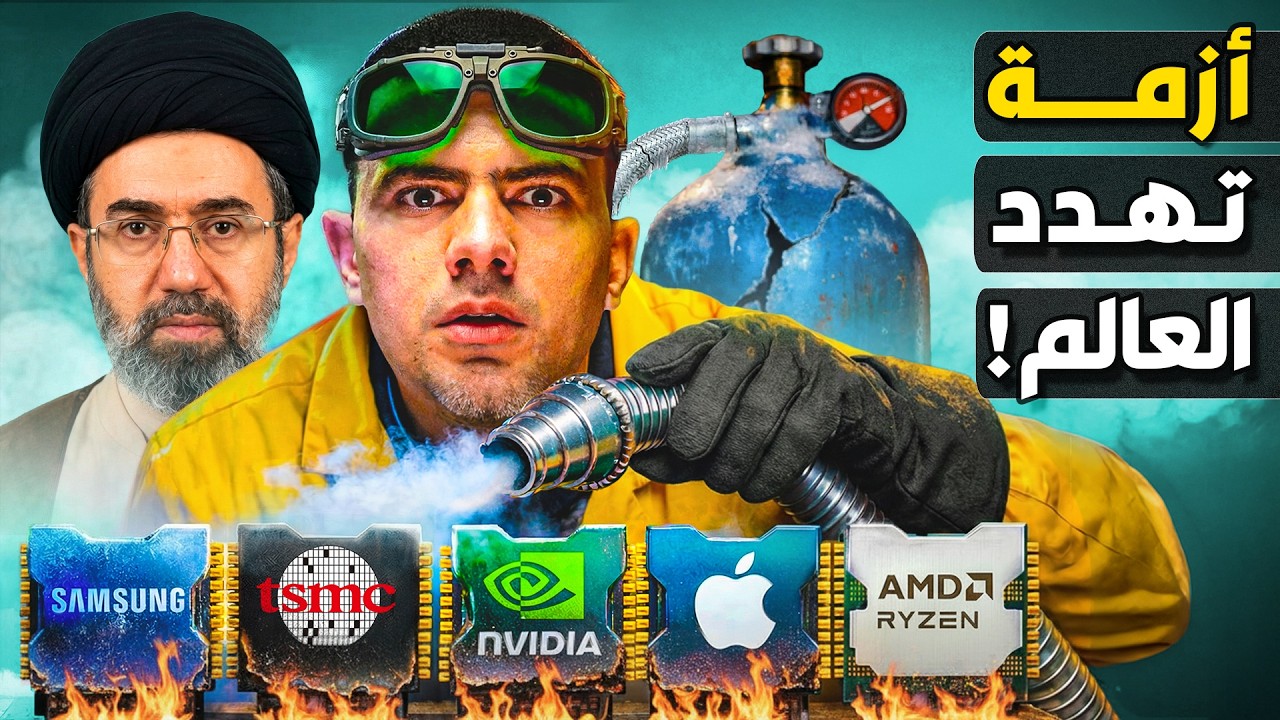
Did you know that a lightweight, colorless gas is threatening to shut down the entire tech industry? Helium, often associated with birthday balloons, is actually the backbone of semiconductor manufacturing. The looming helium supply crisis could disrupt technology as we know it, making devices in your hands mere expensive paperweights. Today, we'll explore how this crisis unfolded, its significance, and what geopolitical factors contribute to this urgent situation.
The Hidden Crisis: Helium's Role in Technology
Helium is essential for semiconductor manufacturing. As an industry leader, you may wonder about the implications of helium's role. This lightweight gas isn't merely a party accessory; it plays a critical role in various manufacturing processes. The semiconductor industry relies heavily on helium due to its unique properties — it is chemically inert and has exceptional thermal conductivity.
The connection between helium and semiconductors cannot be overstated. For instance, cooling machinery in chip fabrication plants depends on helium's ability to maintain low temperatures without contamination. Without this gas, production halts, leading to a ripple effect across multiple industries dependent on chips.
Why does this crisis matter to you? As a CEO or decision-maker, understanding the ramifications of helium shortages is crucial for strategic planning. If semiconductor manufacturing faces disruption due to helium scarcity, the consequences could extend far beyond immediate supply chain issues; they could jeopardize your company's growth and innovation potential.
Understanding Helium's Importance
Helium is not just another gas; it's vital for sustaining high-tech industries.
The Connection Between Helium and Semiconductors
Helium facilitates cooling and protects semiconductor wafers during critical processes.
Why This Crisis Matters to You
The potential fallout from helium shortages can impact your strategic decisions.
How Helium Powers Semiconductor Manufacturing
Helium's unique properties make it irreplaceable in chip fabs. Understanding how this gas powers semiconductor manufacturing will shed light on its significance in the tech landscape.
Firstly, helium cools critical machinery essential for production. In environments where precision is paramount, such as ASML’s EUV lithography machines, only helium can manage extreme temperatures without contaminating equipment. Imagine shutting down these machines due to a lack of cooling — that scenario is becoming increasingly likely.
Secondly, protecting wafers during production is another area where helium shines. Any temperature fluctuation can ruin an entire wafer during ion implantation processes; thus, the absence of helium poses severe risks to production quality.
Additionally, detecting leaks with precision relies on helium's small atomic structure. Traditional gases fail where helium excels — finding microscopic leaks in vacuum chambers is crucial for maintaining operational efficiency within fabs. If these leaks go undetected, catastrophic failures may ensue.
Cooling Critical Machinery
Only helium can provide optimal cooling for advanced manufacturing equipment.
Protecting Wafers During Production
The absence of stable temperatures can lead to significant production losses.
Detecting Leaks with Precision
Helium allows fabs to maintain operational integrity by identifying leaks effectively.
The Global Helium Supply Chain: Where It Comes From
The global helium supply chain reveals alarming data about its availability. Helium isn't produced synthetically; instead, it emerges as a byproduct of natural gas extraction. According to recent statistics from the U.S. Geological Survey, global helium production sits at approximately 190 million cubic meters annually.
The United States leads this market with around 81 million cubic meters but consumes most of it domestically. Conversely, Qatar stands out as another significant supplier by producing about 63 million cubic meters per year — nearly one-third of global supply and critical for ultra-high purity levels necessary for chip manufacturing.
However, geopolitical factors threaten this delicate balance. Qatar's Ras Laffan Industrial City houses the largest helium production complex globally but recently faced attacks amid regional conflicts that jeopardized operations drastically.
Natural Gas Extraction and Helium Production
Helium primarily derives from natural gas extraction processes worldwide.
Key Players in the Helium Market
The U.S. and Qatar dominate global helium production significantly impacting supply chains.
The Quality of Helium: Why Purity Matters
Ultra-high purity levels are essential for effective chip manufacturing processes.
The Impact of Geopolitical Tensions on Helium Supply
Geopolitical issues are disrupting helium supply chains at unprecedented levels. Recent conflicts have direct consequences on global resources like helium — an essential input for technology manufacturers worldwide.
The ongoing conflict involving Iran has brought severe repercussions for Qatar's production facilities; missile strikes targeted Ras Laffan directly affecting output capabilities there. Following these attacks, QatarEnergy declared force majeure — meaning they couldn't fulfill contracts due to circumstances beyond their control — resulting in roughly one-third of global supply vanishing overnight!
This situation escalates further when considering shipping routes crucial for transporting resources across borders; Iran effectively closing off access through the Strait of Hormuz poses significant challenges for moving supplies internationally.
Iran's Conflict and Its Consequences
The conflict has directly impacted Qatari operations severely constraining global supply chains.
The Closure of Key Production Facilities
The sudden shutdown leaves major markets scrambling for alternatives amid scarcity concerns.
How Shipping Routes Affect Supply
Restricted shipping routes complicate logistics exacerbating overall resource shortages globally!